
DAY 4
Genesis 1:14-19 :
14 And God said: “Let there be lights in the expanse of the heavens to separate the day from the night. And let them be for signs and for seasons, and for days and years,
15 and let them be lights in the expanse of the heavens to give light upon the earth.” And it was so.
16 And God made the two great lights — the greater light to rule the day and the lesser light to rule the night — and the stars.
17 And God set them in the expanse of the heavens to give light on the earth,
18 to rule over the day and over the night, and to separate the light from the darkness. And God saw that it was good.
19 And there was evening and there was morning — the fourth day.
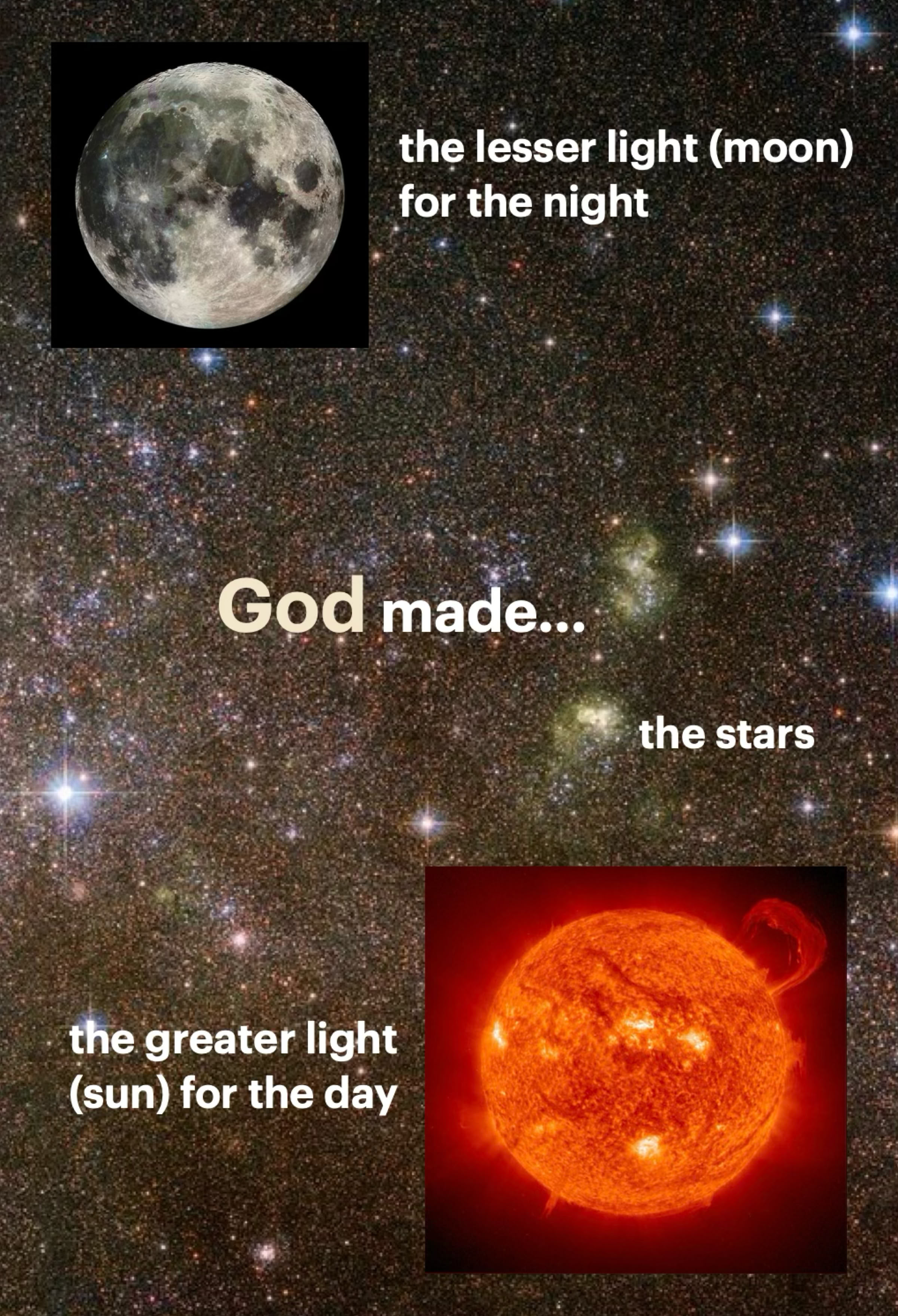
• God is only talking about lights and does not specifically name them as the Sun and Moon, because people should not worship the stars as deities. Celestial bodies are not deities, but only lights.
God warns about this in Deuteronomy 4:19:
„And be careful not to raise your eyes to heaven and look at the sun, the moon, and the stars, all the heavenly lights, and allow yourself to be drawn away and worship them and serve them, things which the Lord your God has allotted to all the peoples under the whole heaven.“
• God created everything in perfect order.
The Earth is at the optimal distance from the Sun so that the conditions necessary for life exist, such as liquid water and the right climate. This is not the case with our neighboring planets in our solar system.
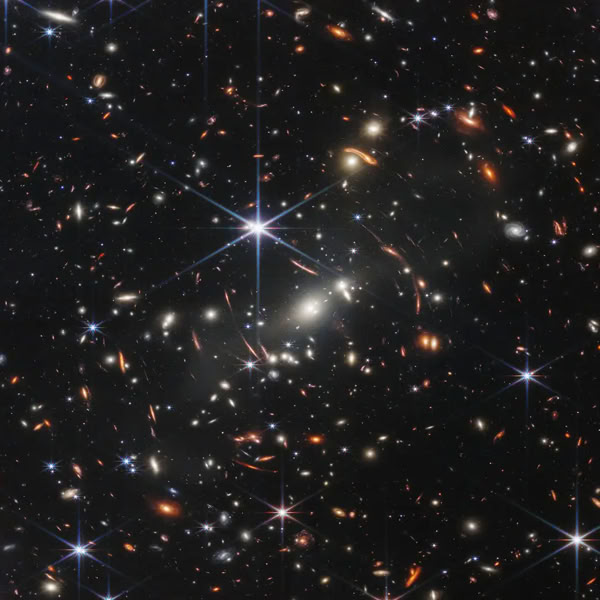
• Around 5000 stars and a few galaxies can be seen from Earth with the naked eye!
• The estimate number of stars is a 7 with 22 zeroes after it! They are innumerable…
As God says in Genesis 15,5:
„Now look toward the heavens, and count the stars, if you are able to count them.“
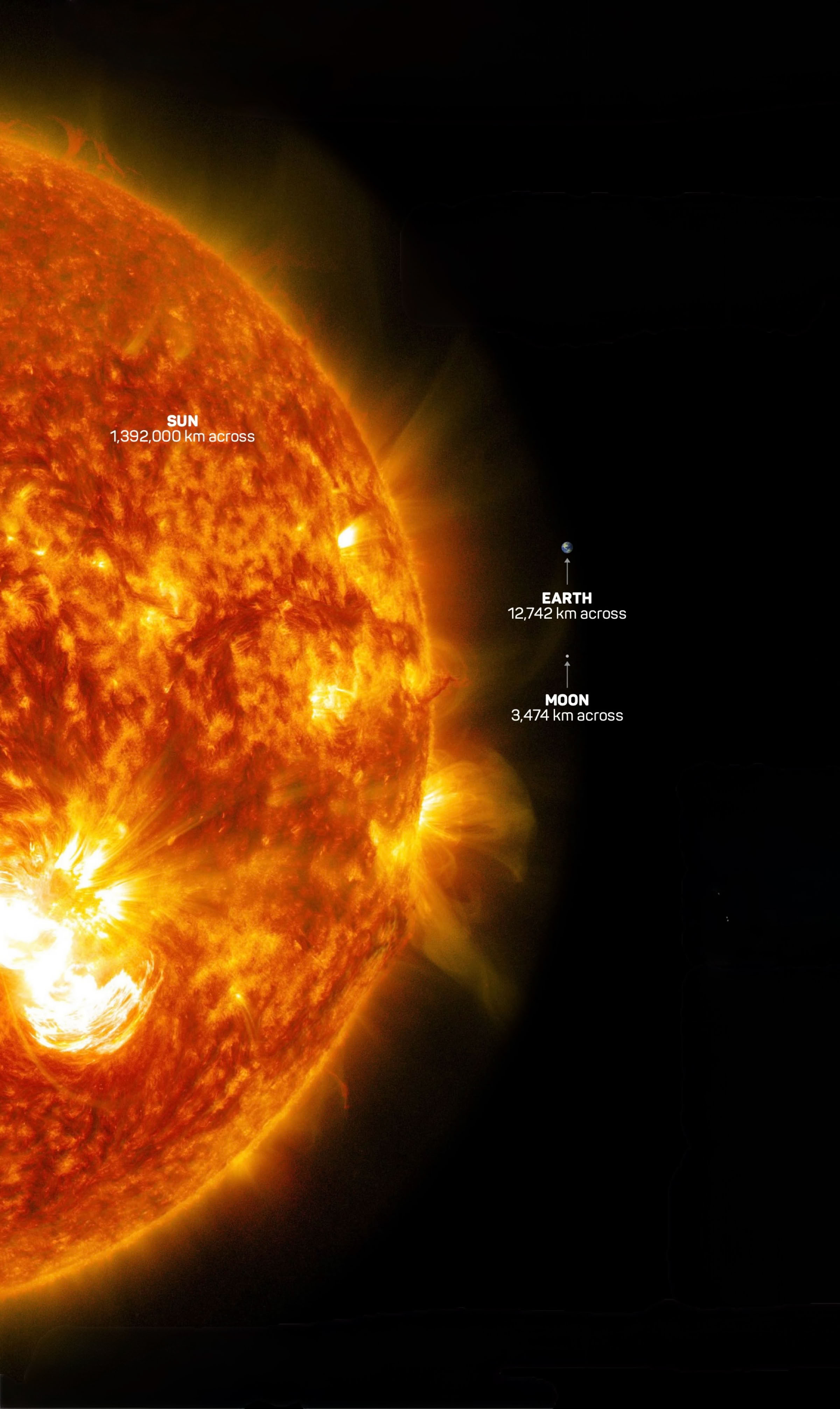
• The Sun is so big that it could fit 1 million Earth globes!
• The Sun is 109 times bigger across than Earth, and Earth is about 3.67 times bigger across than the Moon.

Our Time Calendar
Our calendar can be derived from the behavior of the celestial bodies Sun, Earth and Moon. They serve for orientation in time and space:
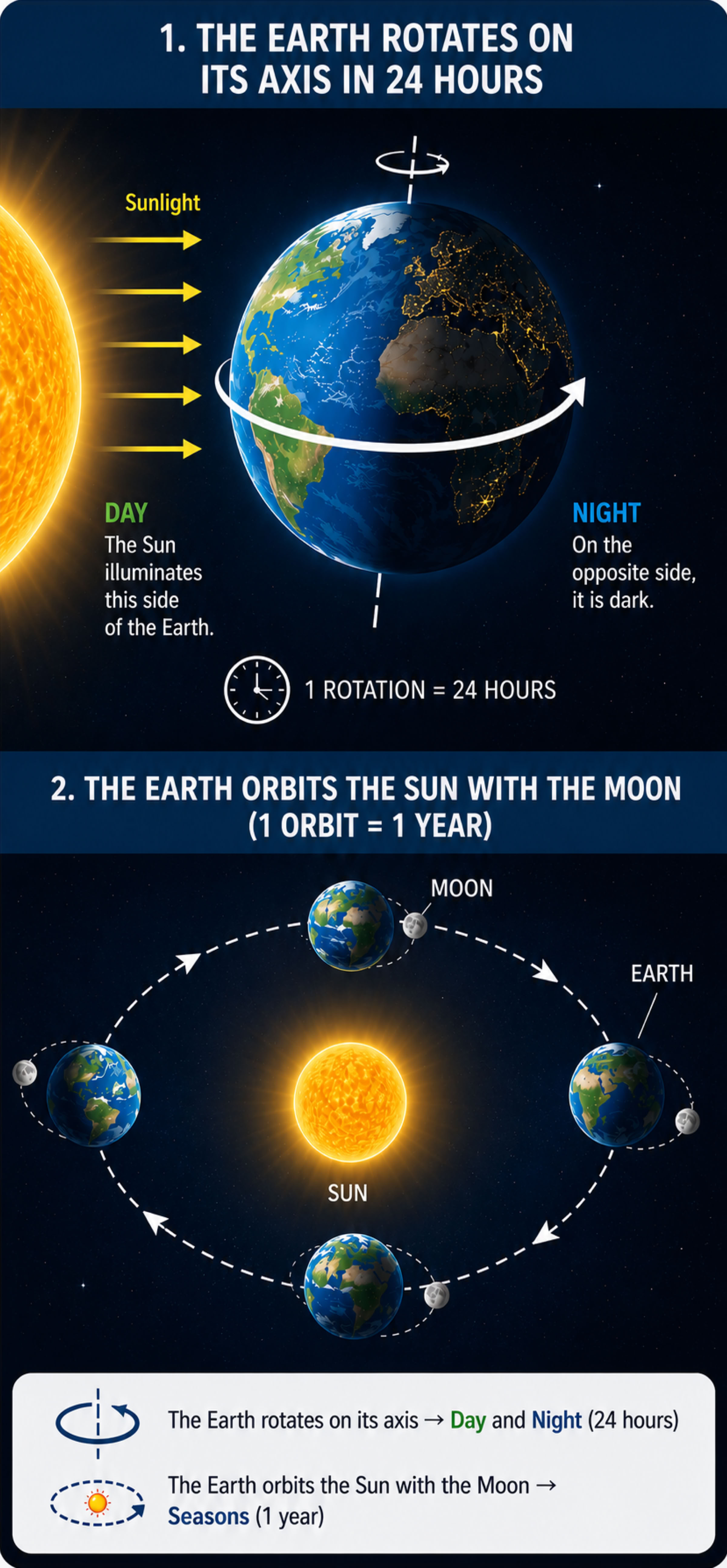
• The day is determined by the rotation of the Earth and the rising and setting of the Sun.
The Earth rotates once on its axis in 24 hours at a speed of 1670 km per hour at the equator. But if you stand on the North Pole or on the South Pole, then all you’ll do is turn around on the spot. This is the point around which the Earth spins. It’s called the “axis”.
Because the Sun seems to move across the sky, you may think the Sun travels around the Earth. For a long time that’s exactly what people thought. But it’s actually the Earth that travels around the Sun, and the spinning of the Earth on its axis makes the position of the Sun in the sky change.
• The month is determined by the movement of the Moon around the Earth or by the phases of the Moon.
The Moon orbits the earth once in 28 days.
• The year is determined by the movement of the Earth around the Sun and by the various constellations that shift over the course of the year (12 signs of the zodiac).
It takes the Earth 365 days to orbit the Sun once. It moves at a speed of 30km per second.
• The week is given us by God through His example in creation: 7 days.
You can read about this in the Bible in the first book Genesis, chapters 1 to 2.